

The current digital landscape of marketing produces a huge amount of data. However, raw numbers alone cannot promise business success. Marketers need actionable insights to improve campaigns, track performance, and make decisions based on data. Tableau allows marketers to transform large volumes of core information into interactive dashboards that help businesses make decisions in real time. Why Marketers Use Tableau Data-Driven Decision Making: Tableau enables marketers to track the real-time performance of campaigns and make necessary changes. Improved Reporting: Static spreadsheets get replaced with interactive dashboards, thus providing dynamic insights into customer behavior. Scalability: Whether it’s a startup or an enterprise, Tableau scales to meet the growing data analysis needs of a company to ensure long-term success. How Tableau is Used Marketers study trends, optimize campaigns, and improve customer engagement using Tableau. COFCO Coca-Cola Beverages Ltd., one of China’s largest bottlers, integrates Tableau with its ERP and CRM systems to monitor in real time the performance of sales and supply chain data. By doing so, COFCO Coca-Cola is able to adjust regional marketing strategies, refine pricing models, and optimize inventory to meet demand. Tableau offers another added value for retailers through the unification of large-scale data. For Whole Foods Market, consisting of over 460 locations in the marketplace, it had poor data integration among its stores. Tableau standardized an analytics platform in which the chain could start tracking sales trends, customer tastes, and forecast inventories better. With data as the foundation, Whole Foods began to readjust regional promotions and store layouts. Similarly, Chipotle Mexican Grill uses Tableau to track business performance at all 2,400 locations. As Chipotle says, “being able to effectively visualize customer demand, fluctuating sales, and employee productivity at each store helped the marketing and operations teams work together more in tune.” Thanks to such an opportunity to perform real-time tracking of its store performance, the company enhances its loyalty program and promotional activity. Conclusion Without data visualization, raw numbers become just noise. Tableau equips businesses such as COFCO Coca-Cola, Whole Foods, and Chipotle to change data into insight that drives profitability. In today’s fast pace of digital marketing, Tableau should be every marketer’s instrument to make smarter and more insightful data-driven decisions. The best marketing decisions aren’t guesses-they’re backed by data, and Tableau makes that data visible. Click here to read more like this
Tesla Global Branding Approach: Strength & Vulnerabilities
Tesla is the revolutionary leader of the electric automobile (EV) and green power industry, spurred on by change, green-mindedness, and an advanced world image. Whilst its global brand strategy has proven extremely profitable, customer support, adaptation in different countries, and sustained brand position are fields of vulnerability. This blog explores what is working for Tesla’s global brand and what areas it must improve upon in a bid to continue its leadership. Tesla Global Branding Strengths 1. Innovation as Core Brand Image Tesla is not just a motor vehicle company but a technology and an energy company. Being the first to introduce EV technology, autonomous-driving technology, and energy solutions has been a driver. 2. Sustainability & Green Energy Leadership Tesla stands as a sustainability leader, making it a green aspiration brand for consumers worldwide. Areas Where Tesla Can Improve 1. Customer Service & Quality Control Tesla’s explosive growth has revealed issues with product and service quality. Solution: Tesla needs more after-sales service and quality assurance to maintain customer trust. 2. Global Market Adaptation Tesla branding is globally consistent, but local adaptation in certain markets is required. Solution: Local marketing and partnership investments are required for Tesla to establish its presence globally. Conclusion: The Future of Tesla in Global Branding Tesla’s fast-paced innovation, sustainability imperative, and premium positioning have made it a global powerhouse. But capturing customer service hearts, understanding the subtleties of foreign markets, and aligning its brand voice will be critical to long-term sustainability. By refining these areas, Tesla can continue to dominate the EV space and further mold the future of transportation. Innovation drives Tesla’s success, but customer experience and market adjustment will determine its future. Click here to read more like this
Corporate Social Responsibility: Brands that correct it and who remember the mark
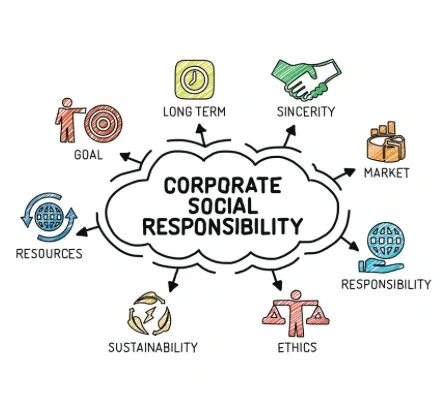
Corporate Social Responsibility (CSR) is not just a discussion – this is a powerful way for brands to connect with consumers and create meaningful effects. Some companies integrate social good in their business models in a way that feel real and effective, while others make surface-tier efforts that come as a protestor or even misleading. This post takes a look at the brands that have successfully leveraged CSR to enhance their image and who have failed to support their message with real action. Brands that are CSR correct 1. Patagonia: Sustainability Patagonia is one of the most respected brands in sustainability, and for good reasons. Its commitment to protect the planet is not just part of a marketing campaign – it is woven into everything they do. Why does it feel authentic: ✅ 1% for the planet – donates 1% of all sales for environmental reasons. ✅ Do not repair, replace – encourages customers to fix the old gear rather than buying new. ✅ Action beyond words-Company has sued the government on environmental policies and has even given its ownership for the Earth-centric Trust. Example: Unlike brands that slap “environmentally friendly” on a label, Patagonia proves its commitment through constant actual action. Their activism is not only align with their message – it defines their brand. 📷 2. State Bag: With objective State bags “buy a”, operate on a model, but what makes them stand out is that they just go beyond handing backpacks. They invest in communities by financing mentorship programs, tuition and social justice initiatives. Why does it feel authentic: ✅ The product goes beyond donation – their work includes mentorship programs and educational initiatives. ✅ Encourages dialogue on social issues – their #WHATDOWETHEKIDS initiative enhances significant discussion about social justice. ✅ Instead of one-time giveaways, STATE Bags partners with local organizations to create lasting change. Example: State bags do not only send backpacks to children and walk away. They are partners with community leaders to ensure that children get necessary support and resources for success. Brands that recall marks on CSR 1. Pepsi: Kendall Genner Advertisement Failed Pepsi’s 2017 Kendall Jenner is an ideal example of commercial corporate misunderstanding. The advertisement tried to portray Pepsi as an integrated force in activism, but was widely joked and criticized. Why it felt inhuman: ❌ The exploited social movements – advertising suggested that a can of Pepsi could solve the issues of racial and social justice, which many people saw as despising real conflicts. ❌ No real action behind this – unlike brands that support activeness with charity or policy efforts, Pepsi did nothing beyond making advertisements. ❌ Immediate backlash – public and activists called him out, forced Pepsi to draw advertisements within 24 hours. Example: Instead of promoting Pepsi’s image, this advertisement hurts its credibility, showing that CSR is to be supported by real commitment – not only attractive advertisements. 📷 2. Volkswagen: Dieselgate scam Volkswagen marketed himself as a leader in stability, while secretly cheated emission tests – one of the biggest examples of corporate deception in recent history. Why it felt inhuman: ❌ “green” was marketed while pollution-VW claimed to sell environmentally friendly diesel cars, hiding the fact that they were producing 40 times more than the legal pollution limit. ❌ broke the Consumer Trust – millions of customers lied, causing lawsuits and financial punishment. ❌ Large -scale reputation damage – cost of scam VW billions and forced leadership changes. Example: While Volkswagen was busy marketing as environmentally responsible, it was actively violating emission laws, proving that CSR is a recipe for disaster without transparency. Conclusion: CSR only works when it is real Corporate social responsibility cannot be only a marketing strategy – it should be a main part of a company’s identity. Brands like Patagonia and State Bags prove that when CSR is real, it creates loyalty and trust. On the other hand, brands such as Pepsi and Volkswagen suggest that surface CSR efforts can cause more damage. Consumers are intelligent and doubtful today – they can reveal the real commitment and the difference between a PR stunt. True corporate responsibility is not just about what you say – it’s about what you do to make a difference continuously. Click here to read more like this
Refining the Marketing Mix Strategy for Biom
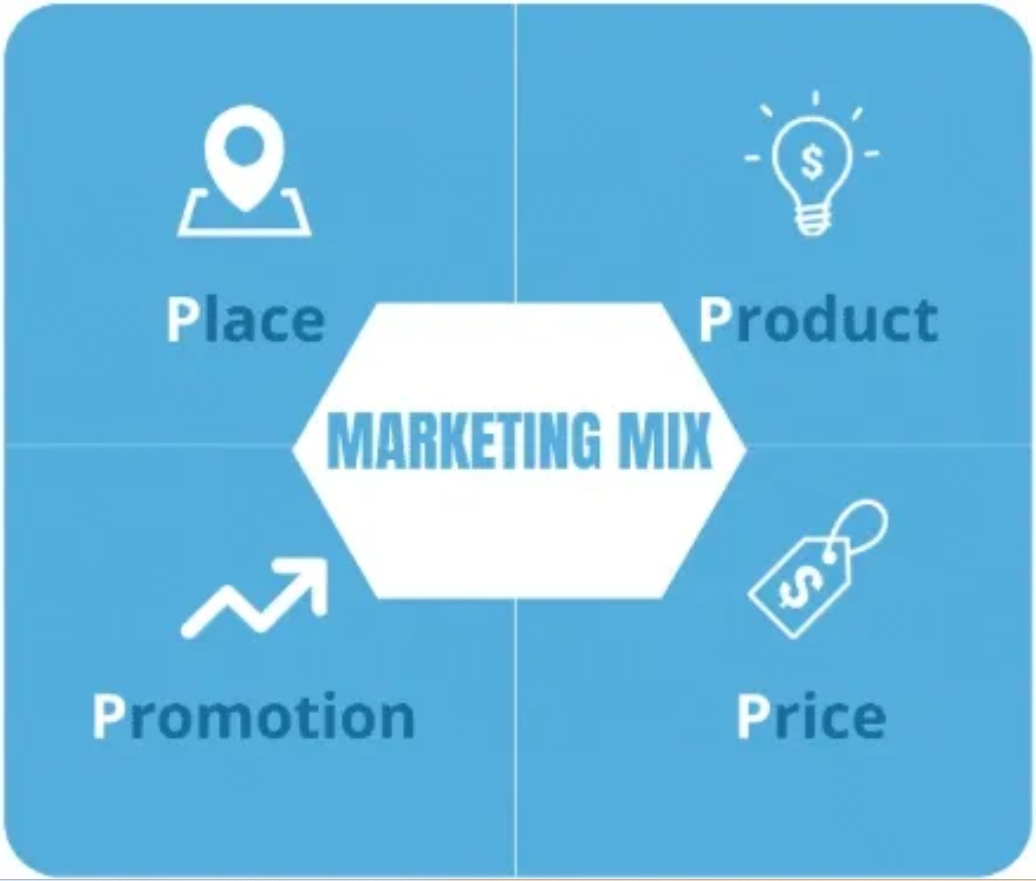
Refining the Marketing Mix Strategy for Biom: A Path to Greater Success Biom, a leader in biodegradable wipes, has successfully positioned itself as a sustainable alternative to traditional wipes. Its marketing mix—product, place, price, and promotion—plays a critical role in its success. Let’s examine Biom’s current strategy. Let’s see where it can offer even better modes for execution. 📷 Product: Eco-Friendliness at Its Heart Biom’s biodegradable wipes are good for consumers who care about the environment and produce quality. Such wipes decompose quickly and do not lag in performance, hence enabling the brand to stand close to the conventional ones in the market. Place: Expanding Visibility Biom sells its goods mainly through an e-commerce interface and a select few eco-friendly retail stores. This strategy targets tech-savvy, eco-conscious consumers but misses opportunities to engage mainstream shoppers in larger retail stores. Price: Premium with Accessibility The premium price of Biom ensures the customer that it is one of the best qualities regarding sustainability and is worth paying more to go greener. The higher price point may, however, deter price-sensitive buyers. Promotion: Amplifying the Message Biom focuses its promotional activities on customer education. It trains them on the environmental benefits of switching to biodegradable wipes. Campaigns in social media partnerships with influencers, especially in the niche of ecology, have enhanced the brand’s awareness and trust in the target market. 📷 Improvements Further developing Biom’s product mix would be one step toward ancillary complementary eco-friendly ancillary products. More partnerships, particularly with some mainstream retailers, will help develop its visibility far better. Introducing tiered pricing and smaller product sizes could attract budget-conscious consumers without compromising premium positioning. At the same time, organizing either community events or user-generated content could more loudly shout promotion for Biom’s brand. All these would amply help Biom gain a far bigger range of viewership while also being true to its sustainable mission ahead. Conclusion This marketing mix positions Biom for a sustainable competitive advantage over ordinary wipes. From here, all that is to be done for Biom is its strategy refinement because it will expose it to more consumers. In a fast world that thinks sustainability, an innovative and quick-to-adapt company like Biom will be determining its success for the greener living market. Sustainability is not a duty but an opportunity. Click here to read more like this
Brand Elements that Speak
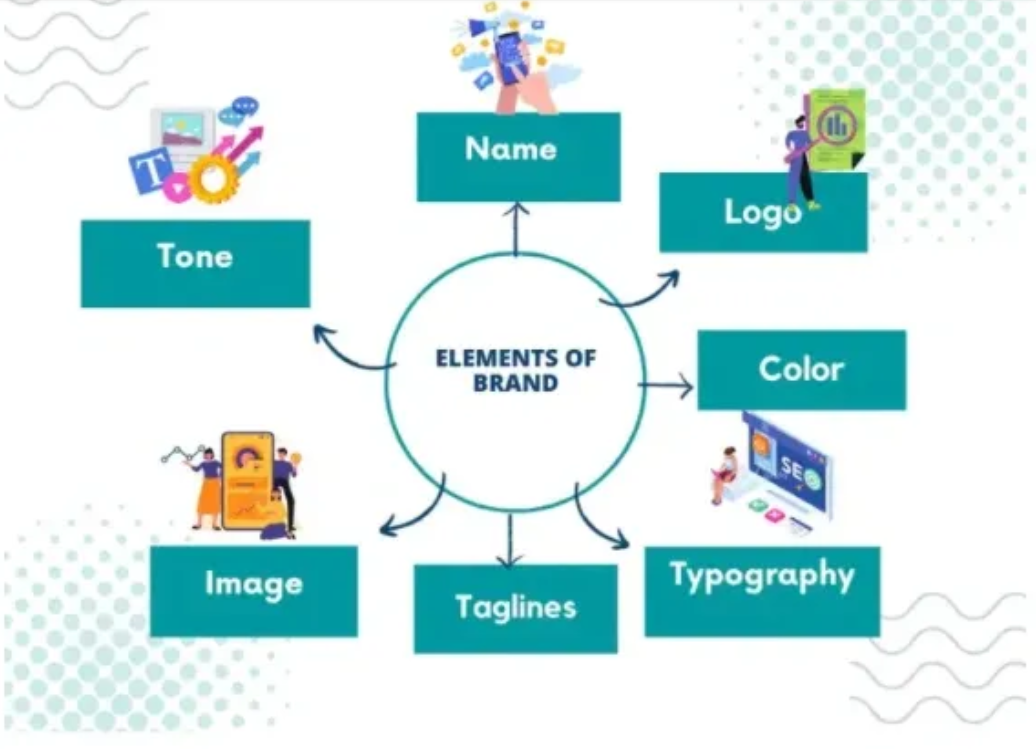
Brand Elements that Speak: An Investigation of Alignment of Positioning and Personality Whenever everything for a brand perfectly aligns in service to that positioning and personality, magic is at work. All elements are integral parts of any branding: logo, packaging, taglines, product experiences, and the bits. Let’s investigate how my favorites, including Rare Beauty, Apple, and Disney, really rise above in connecting all elements in their positionings for strengths, where improvements may lead to real enhancement: Rare Beauty Positioning at Rare Beauty is all about empowerment through individual beauty and imperfection; every bit of the brand screams that. From minimalistic, elegant packaging to versatile product formulas, Rare Beauty keeps up the promise of friendliness without losing any of the traits of a premium brand. The authentic voice of Selena Gomez and her advocacy for mental health make this brand more humanized, relatable, and full of compassion. According to Allure, 2023, the success of Rare Beauty lies in how it resonates with a younger audience that values authenticity and inclusivity. Improvement: The brand could go a step further in fulfilling its mission by offering more accessible price points or smaller product options to reach a broader audience. Apple Apple is another brand that has mastered the alignment of its elements with its personality and positioning. Minimalist design from the company, an integrated product ecosystem, and user-centered retail complete its but innovative-simple image. What gives Apple lots of power is the premium and intuitive experience it creates in unboxing a device to integrate that device with other Apple products. According to Forbes, in 2023, Apple will lead the technology market due to its relentless focus on coherent branding across all touchpoints. Improvement: One potential flaw in Apple’s strategy is its closed system, which tends to annoy consumers who want more freedom. Allowing more compatibility with other non-Apple devices would open up more markets without sacrificing any of its identity. Disney Disney evokes wonder, nostalgia, and imagination, with the elements of its brand shockingly on-message. Starting with the iconically magical logo castle that sets the fantastic mood, fantastically playful typography leads to content driven by highly magical storytelling that creates a timeless magic experience, leading audiences from classic animated film epics through elaborately developed Disney parks and beyond. The experiences have been very consistent and memorable, and I am surely one of the leaders in the entertainment industry. Improvement: To further spread its reach to more people in the world, Disney could tell more culturally diverse stories that would strike a larger chord while maintaining the core magic intrinsic to the brand. Conclusion Each of these brands show just how aligning all the elements to the positioning and personality was able to strike an effective cord with their audience. Be it Rare Beauty, which champions the cause of being different, Apple is committed to its simplicity, or Disneyland is perfecting its art of telling stories- all. This shows that deliberation in design and messaging won their loyalty and trust. That said, even the most successful brands do evolve with time. The subtle changes-for instance, a line of products or improving accessibility-can also be a way through which iconic brands move with the times. The most relatable brands will still be those that deliver, engage, and make a personal connection with us. Read more like this one here

Data Hierarchies: The Key to Organized and Smarter Decision-Making
In the world we live in today, hierarchies assist organizations in presenting and interpreting a volume of information with high accuracy. A well-defined hierarchy ensures no ambiguity or misinterpretation and that the business can analyze any trend appropriately. Types of Hierarchies One-to-One (1:1) – Each value will have only one value related to it. One-to-Many (1:M) – One value is associated with more than one value. Many-to-Many (M:M) – Multiple values are associated with multiple others. Why Hierarchies Matter Well-organized hierarchies allow for better decision-making, good reporting, and consistency of data. Without these, businesses will fall prey to misclassifications and wrong insights. For example, Nike will organize sales data by category (footwear, apparel), subcategory (running shoes, basketball shoes), and model (Air Max, Pegasus). It will help track the best-sellers and inventories efficiently. Netflix organizes its content library into hierarchies such as Genre → Subgenre → Movie Title, enabling it to offer personalized recommendations to users based on their preferences. Conclusion From corporate franchises to product catalogs, hierarchies smooth the process and increase data accuracy. Companies such as McDonald’s, Amazon, Nike, and Netflix all rely on structured hierarchies to analyze trends, predict demand, and enhance user experiences. “In business, a well-structured hierarchy isn’t organization- it’s the key to smarter decisions.” Click here to read more like this
Super Bowl 2024 Ads: Brand Awareness vs. Image-Building
The Super Bowl is one of the strongest stages for advertisers, given that every brand pays to capture millions of eyeballs. Some brands use their Super Bowl ad strictly to build brand awareness, while others want to add depth to their brand image by associations that are relevant and positive. Brand awareness simply means recognition of a brand’s name, logo, or product by consumers and is usually created with repetitive exposure in high-visibility spaces, such as the Super Bowl. A brand image surpasses simple recognition; it provides meaning to a brand by relating it to values, emotions, or experiences. Let’s look at the different brands and what they did in the 2024 USA Today Ad Meter rankings and how effective they were. Brands That Focused on Increasing Brand Awareness Several brands treated their Super Bowl advertisements as an opportunity to ensure a massive audience recognized their name. These ads didn’t try to tell especially deep stories, focusing instead on visibility, humor, and repetition. Doritos Dinamita: “Dina & Mita” Doritos launched its Dinamita product line with a sultry ad featuring Danny Ramirez and Jenna Ortega as spicy, charismatic Dina and Mita. Example: This wasn’t an ad about the history of Doritos or the personality of the brand; it was an ad about making people remember that Doritos Dinamita is a hot, new snack. Thanks to humor and very memorable characters, people who had never had the product before knew the name after the Super Bowl. Verizon: “Can’t B Broken” Verizon hired Beyoncé, one of the biggest stars in the world, to show and tell that its network can’t be broken, no matter how hard someone tries. Example: This ad wasn’t about educating viewers on Verizon’s network coverage or customer service-it was about associating Verizon with reliability through sheer star power. By featuring Beyoncé and teasing her new music, Verizon guaranteed buzz and visibility. Uber Eats: “Worth Remembering” Uber Eats used forgetfulness-ridiculously saying that if you forgot something, just Uber Eats it. They also used Jennifer Aniston and David Schwimmer in the ad to add a little nostalgic feeling. Example: Instead of pivoting its brand image, Uber Eats leaned into its core function-delivery-while making sure its brand name was mentioned hither and yon in a humorous, memorable way. Brands That Strengthened Their Image Through Positive Associations Some didn’t just play for brand recall but used the Super Bowl to drive home their brand character and ethos, connecting on an emotive plane with audiences. State Farm: “Like a Good Neighbaaa” This funny and nostalgic ad by State Farm had Arnold Schwarzenegger mispronounce the word “neighbor,” only to be helped out by Danny DeVito. Example: This wasn’t just an ad to make people remember State Farm; it was to reinstate trust, humor, and reliability. By connecting it with their famous slogan, “Like a good neighbor,” State Farm created more loyalty among its consumers while amusing millions. Dunkin’: “The DunKings” Dunkin’ leaned into pop culture and humor, bringing back Ben Affleck, Matt Damon, and even Tom Brady as a fake boy band trying to impress Jennifer Lopez. Example: Dunkin’ didn’t need to build brand awareness-it’s already a household name. Instead, this ad solidified its fun, pop-culture-savvy brand personality, continuing to seal its connection to New England culture and celebrity humor. Kia: “Perfect 10 | The Kia EV9” Kia went the emotional storytelling route, with a young figure skater whose father had built her a home ice rink so that her grandfather could watch her skate-powered by the Kia EV9. Example: Instead of just talking about the features of the car, Kia created an emotional touch by relating its brand to family, love, and technology that bring people together. This ad positioned Kia not just as an automaker but as a brand that makes life’s best moments better. NFL: “Born to Play” The NFL continued to play off the emotional aspect of the game in telling its story of how football changes lives and builds community. Example: The NFL doesn’t need to advertise football itself-but through showing personal stories of overcoming and passion, this ad reinforced the emotional value of the sport and its bond with its audience. Dove: “Hard Knocks: A Dove Super Bowl Film” Dove addressed a very serious social issue: young girls’ quitting sports because of problems with self-confidence. Example: Dove has been long known for body positivity and self-esteem messaging, which this ad again did by reinforcing their mission: to position the brand as a supportive and uplifting entity for young women. Budweiser: “Old School Delivery” Budweiser leaned into classic Americana nostalgia featuring the iconic Clydesdales and Labrador retriever, delivering beer through a winter storm. Example: Budweiser didn’t introduce anything new; it simply reaffirmed its identity as an American classic, reminding viewers of its long-earned tradition and cultural relevance. BMW: “Talkin’ Like Walken” BMW’s ad featured Christopher Walken embracing his unique speech style, humorously showcasing the luxury car brand. Example: BMW’s ad didn’t highlight technical specs—it reinforced BMW as a brand synonymous with confidence, luxury, and exclusivity. The use of Christopher Walken, an actor known for his distinctive and bold personality, further aligned BMW with individuality and status. Conclusion The Super Bowl is more than a channel for ads; it’s a strategic branding opportunity. Some brands, such as Doritos, Verizon, and Uber Eats, were purely into awareness, making sure their name stuck in the minds of people. Others, like State Farm, Dunkin’, Kia, and Dove, used their airtime to reinforce their brand values and thus create positive associations that deepen consumer loyalty. Where brand awareness makes you noticeable, brand meaning makes you memorable-and the most successful Super Bowl ads pull off both. An ad can make you laugh, but the best ones make you feel something. Read more like this one here

Why Your Facebook Ads Aren’t Working (and How to Fix Them)
If you’ve been running Facebook ads and aren’t seeing the results you expected, you’re not alone. Many small businesses struggle to get their ads to perform, but the good news is, it’s usually a fixable problem. Below we’ll cover the top reasons why your Facebook ads might be falling short and what you can do to turn things around. 1. You’re Targeting the Wrong Audience Facebook’s targeting options are powerful, but they can also be overwhelming. If your ads are showing to people who aren’t interested in your product or service, you’ll waste money fast. Fix it: Refine your audience. Use Facebook’s detailed targeting to reach people based on demographics, interests, and behaviors that match your ideal customer. Test lookalike audiences based on your existing customers or email lists. 2. Your Creative Isn’t Engaging Enough Facebook users scroll quickly, so if your visuals or copy don’t grab their attention, they’ll keep moving. Fix it: Invest in high-quality images or videos and write clear, compelling copy that speaks directly to your audience’s pain points or desires. Try carousel ads or short-form videos to mix things up. 3. You’re Not Testing Different Ad Variations One of the biggest mistakes small businesses make is sticking to one version of an ad. Fix it: A/B test everything—images, headlines, calls-to-action, and audiences. Even small changes can make a big difference in results. 4. Your Landing Page Isn’t Optimized Even if people click on your ad, you’ll lose them if your landing page isn’t up to par. Slow load times, unclear messaging, or too many distractions can tank your conversions. Fix it: Make sure your landing page matches your ad message, loads quickly, and has a clear call-to-action. Remove any unnecessary links or elements that could distract visitors. 5. You’re Not Tracking the Right Metrics Many businesses focus solely on vanity metrics like likes and impressions. These numbers can be misleading if they don’t align with your business goals. Fix it: Track metrics like click-through rates (CTR), cost per lead, and return on ad spend (ROAS). These will tell you whether your ads are truly driving results. Conclusion If your Facebook ads aren’t working, it doesn’t mean Facebook ads don’t work. It simply means your strategy needs tweaking. By improving your targeting, creative, testing strategy, landing pages, and tracking, you can turn your ads into a consistent lead and sales generator. Read more like this

Secondary Data vs. Big Data
Secondary Data vs. Big Data: How to Tell Them Apart and How They Affect You Businesses have the privilege of tapping into an ocean of information in this ever-changing world where decisions are increasingly driven by data. Within the numerous types of data, secondary and big data are probably the most highlighted concepts as powerful insight tools. What exactly is secondary data, then, and what’s the difference? The ability to understand the differences is the key to their application for improved decision-making. What is Secondary Data? Secondary data is information previously collected, processed, and published by someone else. These might include resources such as industry reports, government publications, academic studies, and historical datasets. The beauty of secondary data is the fact that it is accessible, it is often inexpensive, and it serves as a very good starting point for research. For example, a company entering a new market may use the government’s demographic data to analyze the data on purchasing power or reports on consumer behavior to define the trends within the marketplace. Secondary data, however, has the limitations of either not being exactly relevant to needs or the possibility of its information being outdated. Big Data Big data, on the other hand, refers to huge and complex datasets derived in real time from digital interactions. This would range from social media activity and website analytics to IoT sensor data. The defining characteristics of big data are volume, velocity, and variety, and advanced technologies like machine learning and artificial intelligence are needed for effective analysis. For example, a retail business can use big data to monitor customer behavior in real time, pinpointing trends such as surges in demand for particular products or tendencies toward specific payment methods. The actionable insights from big data are priceless but often involve a great deal of resources and expertise to manage and interpret. Secondary Data vs. Big Data: Which One Should You Use? Each has its unique strengths: big data and secondary data are useful for different reasons, depending on the research objective. Secondary data is ideal for getting a broad understanding of a topic or market before diving deeper. It’s like reading the summary before starting a novel-it puts it into context and gives direction. Big data will excel when you want immediate, actionable insights tailored to your business. It also provides the best way of optimizing operations, predicting trends, or offering personalization for customers’ experiences. For example, starting with secondary data in understanding historical consumer behavior, big data analytics applies to follow the live trend in strategies. Conclusion: They are not mutually exclusive. Secondary data provides the background understanding; big data provides the granularity and timeliness that enables precision. Together, they enable businesses to create holistic strategies driven by both the past and the present. Secondary data gives you the map; big data shows you the terrain. Click here to read more like this.
Opening up Knowledge
Opening up Knowledge: The Most Valuable Analytics, and Why It Matters In this increasingly information-driven world, many different types of analysis are presented to businesses, yet not all analyses are created equal. Among them, predictive analytics is brilliant in forecasting trends, showing forthcoming risks, and presenting proactive insights. This kind of analytics doesn’t just show retrospective insight; instead, with predictive analytics, businesses can forward plans with confidence and clarity. 1. What is Predictive Analysis? Predictive analytics makes use of historical data, complex algorithms, and statistical models to recognize patterns and forecast forthcoming events. It shifts decision-making from reactive to proactive because one gets a roadmap of what is likely to happen next. An e-commerce company, for example, could analyze past sales to estimate the demand for certain commodities during the holiday seasons. With this, it will be easy to put strategies in place to have enough inventory of those items and also concentrate marketing efforts for maximum profits. 2. What Information Does It Yield? The insights of predictive analytics span a wide range and are very compelling-from understanding customer behavior, including not only which customers are likely to leave, but what products they’re most likely to be interested in; detecting emergent market trends, letting companies adapt to forecasting needs for operations that cut down waste. For instance, a streaming service can predict what genres will be trendy next month in order to recommend those genres to users to keep them delighted and engaged. 3. How to Apply the Insights? Predictive analytics transforms raw data into action. It enables businesses to fine-tune marketing campaigns to forecast customer preferences, efficiently allocate resources by anticipating demand, and innovate by uncovering new growth opportunities. For example, a company that is going to launch a new product could make use of predictive insights to find the right target audience for the product in question, with maximum possibility of success using minimum effort. Conclusion: The Future is Predictive Predictive analytics is not just a tool but a strategy for success. By unlocking insight into future trends and behaviors, businesses can make informed decisions, seize opportunities, and stay ahead of the competitive curve. In a dynamic market, predictive analysis converts ambiguity into clarity and gives the courage to forge ahead. Numbers tell the story of the past; insights write the script for the future. Read more like this here
